
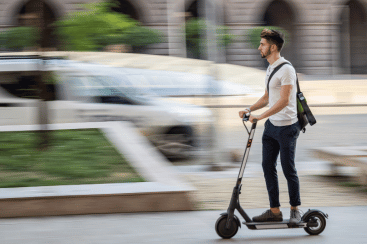

People usually discuss the risks to riders, but pedestrians also need protection. An e-scooter can injure pedestrians. Injuries can include broken bones, dislocations, and tendon tears in the shoulder from the initial impact.
Injuries from e-scooter use continue to rise, and e-scooter pedestrian accidents remain part of that risk. The Consumer Product Safety Commission estimates that emergency room visits for e-scooter injuries reached 79,300 in 2024, according to its micromobility report. The report also noted 206 e-scooter-related deaths from 2017 to 2024. Upper limbs were among the most frequently injured body parts.
Pedestrians make up a small share of e-scooter injuries, but dense urban traffic may contribute to crashes involving them.
Narrow sidewalks and cycle tracks can leave pedestrians and cyclists with very little room. All through the day, they can end up only a few feet apart. Some of these close calls can cause very severe injuries, such as fractures and head trauma.
Pedestrians on the Clock
Not every pedestrian is out for a stroll. Some of them have official business to deal with. These are delivery workers, crossing guards, and others who spend their shifts on foot. These individuals share the same streets as scooters.
A worker hit mid-shift may have a workers’ compensation claim and, in some cases, a separate claim against the rider or another party. The details depend heavily on state law.
Shoulder injuries turn up often in work injury cases. In North Carolina, workers with shoulder, neck, and back injuries from construction, factory, and forklift accidents can pursue workers’ compensation claims with help from Charlotte shoulder injury lawyer Vernon Sumwalt.
Why the Shoulder Takes the Hit
When a person is hit from behind or from the side, they typically will fall before getting a chance to react. This situation often means that either a hand will be extended, or the person will fall onto the shoulder point itself. Both scenarios place a strain on the joint in a manner that it cannot properly deal with.
Collarbone and Upper Arm Fractures
The collarbone is located at the front of the shoulder, with little cushioning over it. Fractures of the collarbone and upper arm bone, according to the American Academy of Orthopaedic Surgeons (AAOS), can occur when someone falls or gets hit. Treatment depends on how far the bone has moved out of its normal position.
Dislocations and Separations
The impact of a hard landing can also cause the ball of the upper arm bone to come out of place. The same AAOS resource states that the most common form, known as anterior dislocation, can result from a fall or a direct blow to the shoulder.
Another possible injury from falling on the shoulder is a separated shoulder. This injury happens when the ligaments connecting the collarbone to the shoulder blade are stretched or torn.
Rotator Cuff Tears
X-rays reveal the state of bones but are incapable of depicting damage to soft tissue like a tear to the rotator cuff. For example, according to the AAOS, an outstretched fall can cause a rotator cuff tear, and the tear may accompany a broken collarbone or dislocated shoulder. Sudden tears usually bring intense shoulder pain and immediate weakness in the upper arm.
A fracture tends to grab attention first. That’s why a torn tendon may go unnoticed at first. Lingering weakness when lifting the arm overhead may lead a doctor to order an MRI. The MRI process can show tendon damage that an X-ray misses.
Records Tell the Story
The healing process of shoulder injury is rather slow, and, often, the complete nature of the damage can be revealed only when swelling subsides or imaging results become available. Information obtained from medical records starting with the first visit provides the most accurate details about the consequences of the crash. Pictures from the scene of the collision, the scooter, and any bruising also help in assessing the situation.
Scooters will continue to be used prevalently in urban environments. Their presence means that the risk of pedestrian traffic accidents remains. Knowledge of the type of shoulder injury caused by scooter accidents will help pedestrians assess their injuries properly.