
Over the past few years, Georgia has quietly become one of Europe’s most compelling destinations for travellers looking for something a little more real. Tucked into the Caucasus, the country blends ancient history with a fast-evolving creative scene, dramatic landscapes, and traditions that feel deeply lived-in rather than curated.
For a country its size, the range of experiences is extraordinary. The Caucasus Mountains dominate the horizon, but Georgia moves quickly between worlds. Subtropical Black Sea coastline, deep river gorges, monasteries carved into rock, and vineyard-covered valleys backed by snow-capped peaks all sit within easy reach. It’s the kind of place that lingers long after you leave.
Best Time to Visit Georgia
When to go to Georgia really depends on how you plan to travel. If you’re heading for the mountains or planning serious hiking, June through August offers the most reliable conditions, with trails open and weather generally stable at altitude. The trade-off is heat in the lowlands. Cities like Tbilisi, Kutaisi, and Batumi can feel intensely warm at this time of year.
For city breaks and a slower pace, May and September are ideal. The weather stays comfortable, crowds thin out, and prices tend to be softer, making these shoulder months some of the best times to visit.
Winter, from November through March, is less straightforward. Much of the tourism infrastructure scales back and parts of the High Caucasus become difficult to reach. The upside is a quieter country and some of the lowest hotel rates you’ll find all year.
Planning Your Trip Duration
Georgia isn’t somewhere you rush. Considering the distance most visitors travel to get here, fewer than four nights rarely feels worthwhile. A week is a far better rhythm. It gives you enough time to experience Tbilisi properly, move beyond the capital, and spend at least a couple of nights in the mountains, which are the heart of the country.
Getting to Georgia
Most international visitors arrive by air, and connections have improved significantly. Tbilisi’s international airport handles daily flights from major European hubs alongside routes from the Middle East and Asia. Near Kutaisi, David the Builder Airport has established itself as the country’s low-cost gateway, particularly for Eastern European routes.
Transportation Within Georgia
Public Transport Options
Once you arrive, travel tends to come down to marshrutky, privately run minibuses covering set routes, or renting a car. Hiring a vehicle costs more but gives far greater flexibility, especially outside major cities.
Rail travel is limited for most itineraries, with the modern Tbilisi to Batumi line being the main route visitors use.
Within Tbilisi, the two-line metro is efficient and easy to navigate. For everywhere else, taxi apps like Yandex, Bolt, and Maxim make getting around affordable.
Domestic flights are increasingly useful for reaching remote regions such as Svaneti or Racha, cutting hours of mountain driving.
Modern Car Sharing with Getmancar
For travellers who want independence without a full rental, Getmancar offers a flexible car-sharing option across Georgia. The app-based service lets you rent vehicles by the minute, hour, or day, which is useful for short city trips or spontaneous day drives.
Getmancar operates a fleet of well-maintained cars, including Ford Focus models, all accessed through the mobile app. Drivers must be at least 21, hold a Category B European licence, and have two years of driving experience. There’s no office visit. Register in the app, find a nearby car on the map, unlock it with your phone, and everything you need is already inside.
The platform runs on three tariffs: minute, hourly, and daily. Trips begin and end in designated zones, and payment is handled automatically through your saved card. It’s a practical option for travellers who want the freedom of driving without thinking about fuel, cleaning, parking, or long rental commitments.
Must-See Attractions
Tbilisi is layered and atmospheric, with historic churches, a slightly worn but characterful Old Town, and sweeping views from the Sololaki ridge reached by cable car. The city has also built a global reputation for nightlife. Venues like Bassiani have helped place Tbilisi firmly on the international club map.
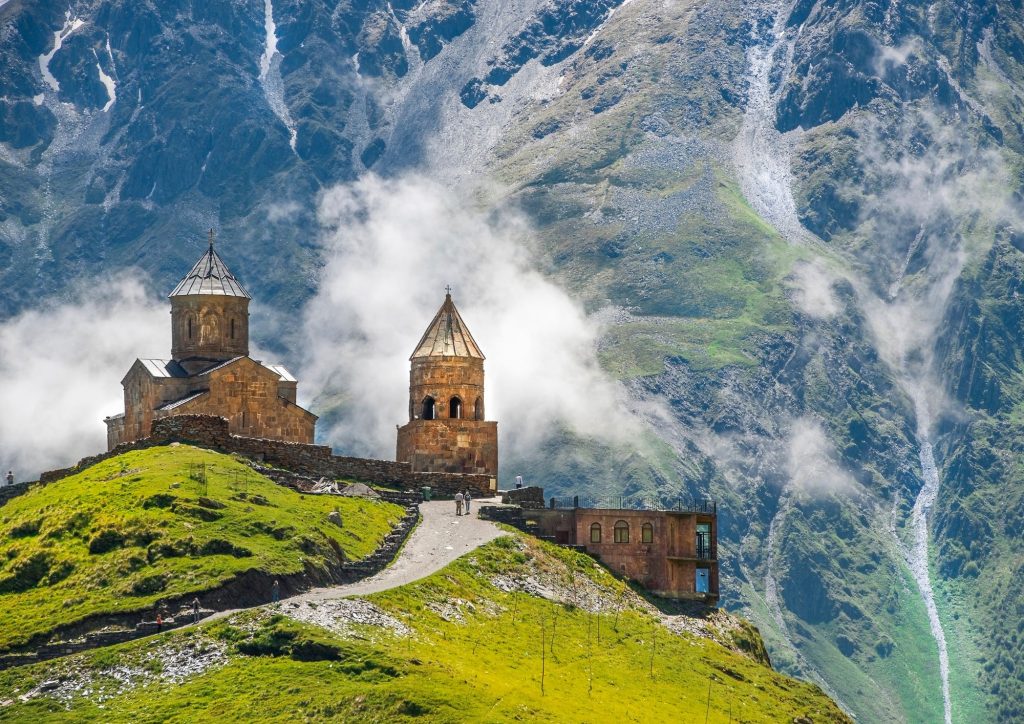
One of the most memorable day trips follows the Georgian Military Highway to Stepantsminda in the High Caucasus. It is widely considered one of the world’s great mountain drives. At the end, the iconic hilltop church sits dramatically beneath the snow-covered slopes of Mt Kazbek.
The Mountain Experience
Time in the mountains is the highlight for many visitors. Despite their scale, Europe’s highest peak, Mt Elbrus, lies just across the northern border, these landscapes are surprisingly accessible.
Flights now reach Mestia in Svaneti, making short trips into the Great Caucasus far easier than before. Even non-hikers can take lifts to Hatsvali for panoramic views, while experienced walkers have countless routes available. The four-day trek to Ushguli is often cited as one of the most memorable.
Budget Considerations
Georgia remains relatively affordable compared with much of Europe, though prices have gradually increased alongside tourism growth.
Backpackers are still well catered for, with family homestays widely available and a growing number of modern hostels in larger cities.
Hotel prices have shifted over the past decade from roughly €40 to closer to €60 per night on average. Short-term apartments vary widely in quality and cost due to strong competition. Food and wine remain excellent value, with good dinners commonly around €10 per person.
Transport is inexpensive unless you rent a vehicle, which can be pricier due to limited competition. Interestingly, flights to Svaneti can sometimes cost less than the long marshrutka journey, though summer availability requires early booking.
Cultural Insights and Practical Tips
Georgian Hospitality
Hospitality here is not a cliché. It is a core part of daily life. Tourism plays an important economic role, and most people have some connection to it.
Staying in private homes, especially in the mountains, often means generous meals, homemade wine, chacha, and long toasts. Guests may also find themselves watching traditional dancing or hearing Georgian polyphonic singing performed spontaneously.
Safety and Security
Georgia is generally very safe. The main risk is road safety, so cautious driving and awareness when crossing busy streets are important. Protests have taken place in Tbilisi since October 2024 following parliamentary elections, so checking current travel guidance before departure is sensible.
Language Considerations
Russian remains the main second language among older generations, while English is widely spoken by younger residents, particularly in cities and tourism settings. Even a few Georgian phrases are usually appreciated.
Religious Etiquette
Most Georgians identify as Georgian Orthodox Christians, and modest dress is expected in churches and cathedrals. Women typically cover their heads and men remove hats. Many churches provide scarves and wraps for visitors at the entrance.
Visa Requirements
Georgia offers visa-free entry to more than 100 nationalities, including the EU, US, UK, Australia, Canada, Israel, New Zealand, South Africa, and Switzerland. Where visas are required, applications can be made through Georgia’s e-Visa Portal for US$20, with processing usually taking around five days.
Quick Reference Guide
Best Months for Hiking: June, July, August
Best Months for Cities: May, September
Minimum Stay: 4 nights
Recommended Stay: 7+ nights
Main Airports: Tbilisi International, David the Builder (Kutaisi)
Metro Cities: Tbilisi
Taxi Apps: Yandex, Bolt, Maxim
Car Sharing: Getmancar (available via app)
Family Homestay Cost: €15–25 per person/night
Hostel Cost: €10–20 per night
Average Hotel Cost: €60 per night
Dinner Cost: €10 per person
Coffee: €1–3
Local Wine (bottle): €2–10
Train Tbilisi to Batumi: €36
Minimum Driver Age (Getmancar): 21 years
Driving Experience Required: 2+ years
Visa-Free Nationalities: 100+ countries
Visa Cost (if required): US$20
Currency: Georgian Lari (₾)