
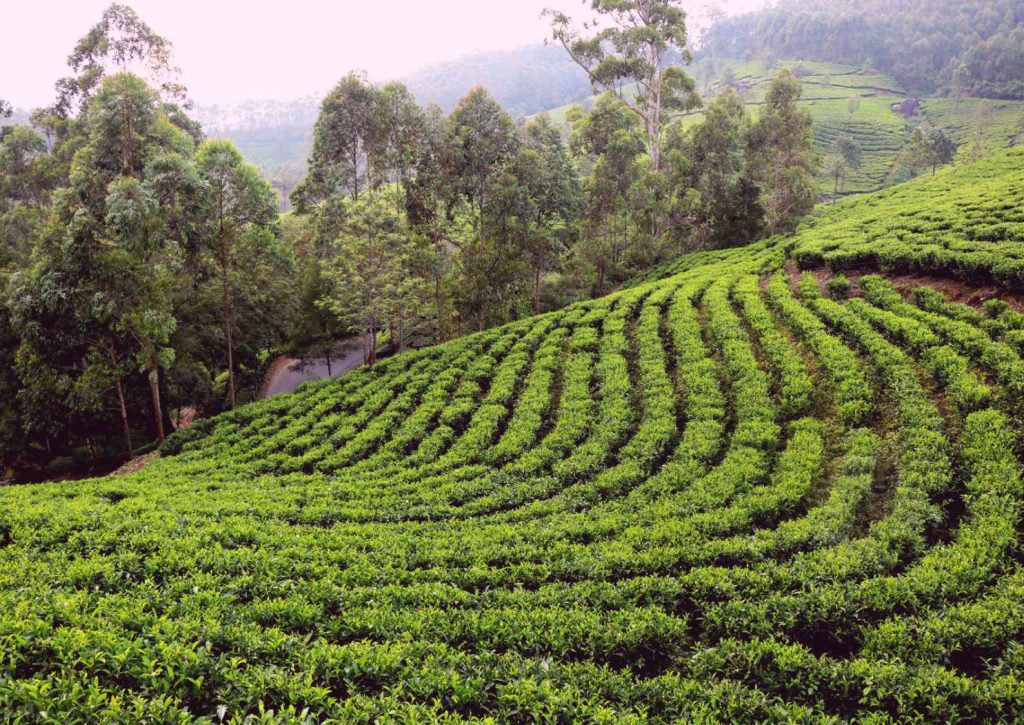
The Vistadome Express we boarded that morning wound through five hours of swiftly changing views. Its glass roof and wide panoramic windows offered an incredible open-air-like sightseeing experience. Outside the glass window of my coach, the route to Dima Hasao alternated between scenes of earthy village life and forests upon hills. Passing across these trails, I noticed a remarkable design of agricultural farmlands with the curvature of steps cut across slopes.
My co-passenger teaches his young child how hill communities have had centuries of history of growing food crops in hilly terrains with indigenous knowledge systems; on windless nights of early summer, they systematically light a ring of fire enclosing their just-harvested lands; this total burning introduces ashes that revive the land’s fertility. Beyond slash-and-burn, I also noticed the interesting arrangement of bamboo irrigation systems made locally to irrigate these slopes. Afar from the train, the arrangement looks like a Studio Ghibli-style masterpiece of perfectly spaced lines cutting across warm, sun-soaked hills. Dima-hasao appears hand-painted in soft watercolours; that train through the hills seemed to have awakened every colour and sight around me.
The North Cachar Hills were on my travel list for a long time because it famously hosts the only hill station of Assam, at Haflong. Having heard of its mesmerising beauty well-spoken of throughout the state, I had saved one special long weekend for this summer escapade. The train through the hills with its many no-signal stretches instantly did one thing for me: my devices went silent and so did I. I absorbed the views slowly, as the train broke through the fog and crossed bridges above clear brooks. These recollections of Dima Hasao come straight from my senses, undisturbed by the nagging pressure to capture the picture-perfect shot at perfect intervals. True as I had heard about this place: it teaches you to slow down; it rewards people who do not rush.
Food exploration: Judima, Maiju & More
A strong scent of woodsmoke filled that noon on which I had reached my destination in Maibang, atop a low hill. Fresh, impressionable gustatory memories come back most strongly to me from this particular day. The family that hosted me prepared to honour guests in the Dima Hasao tribe rituals; the warmest of greetings and tables filled with a big feast of steaming food preparations. The welcome drink, Judima, was their local wine preparation made entirely in their own backyard and served stylistically in a copper vessel. The warmth of the drink makes one mellow in no time; it is consumed slowly by patient sips until you acquire its sweetly bitter undertones before you know it (source).
The aspect of Dima Hasao cuisine that I found most fascinating is how the most simplistic recipes introduced strikingly new taste experiences to my tongue. It was the freshness of indigenous plant ingredients or the community technique of fermentation and wood firing; the flavours were bold and unmistakably never replicated in anything I had had before. The rice I was served, Maiju, was cooked in a traditional method, wrapped in banana leaves and fired; its bright red colour and clinging stickiness made its starchy aftertaste pair beautifully with the many served sides. Most of these sides were healthy, freshly-harvested vegetables and herbs cooked in ways that minimally tampered with their original flavour. The non-vegetarian sides of smoked fish and pork with bamboo shoots were the winning flavours; the charred fish skin gave a fragrant smoky bite while the bamboo shoot was umami and soft to bite into. The food deserves to be described slowly. Dima Hasao surprised me not only through sights and smells but through a taste palate that my body remembers long after the journey.
The Historic Legacy of Dimasa: Maibang
After that hearty meal, I had already started to grow fondness for this place. Those nights were remarkably reflective; in moments, I was left alone with nature’s quiet embraces, breathing in the soft, chilling night winds that rhythmically brushed past our humble homestay. By my first morning there, I had already woken to a picturesque dawn, sipping fikah sah tea with a mesmerising view of the birds and flowers of the valley.
Inside Maibang’s Dimasa Heritage Museum, I encountered the community’s timeless legacy through preserved articles like textiles, utensils and jewellery. Some relics also link to the royalty of the ancient Dimasa Kingdom, and through the museum’s assortments, one could trace an interesting warfare and defence history. The grandiose brick-coloured architecture of the museum itself replicates the structure of a real Dimasa kingdom’s edifice located in Khaspur (source). The place experience was not just nostalgic but one that sufficiently incited my curiosity about the region’s history: I visited various historic ruins like the Longthaini Noh Stone House and Ranachandi Temple. After some quiet final hours by the Didaodip Waterfall and slow-balancing on the Hanging Bridge, I bid farewell to the Mahuar River and the exquisite special town around it.
Where Birds Disappear: Jatinga
On my way from Maibang to Haflong, we had a mysterious place to make a pit stop at. The news covered the story, and so did many travel documentaries; we were bound for Jatinga, where the so-called “bird suicides” were said to occur (source). This is a living, documented and well-studied phenomenon where at nights of late monsoon, masses of disoriented birds erratically fly around the town, launching their bodies into poles, trees and walls until they succumb. Scientifical explanation to this dismisses the ‘suicide’ narrative and explains disorientation as a result of disbalance in magnetic fields by wind currents and loss of vision with artificial lights. What is named the ‘Bermuda Triangle for Birds’ is better known today as the Jatinga Bird Sanctuary, where I spotted egrets, kingfishers and pearly white doves from atop a bird-watch tower. On the way back from there, the road leads you through abundant orange and pineapple orchards where many stopped for the lingering citrusy aroma of fresh fruits.
Surrounded by Hills: Haflong
By the evening of that day, I stood in front of Fiangpui Presbyterian Church, the largest church of the district, for a peaceful moment with myself after the road journey. The setting sun caught the white facade of the church in the most striking light amid the misty surroundings viewed from the hilltop. I let the stillness of the atmosphere guide my nerves to experience total winding down; I observed the soft contours of the valley for long. As the dusk began dissolving into darkness, the temperature dropped to its customary crisp hill-station weather. Bonfires were lit and fresh tea brewed; a magnificent local stew was fired in a pot. I remember having well-rested sleep those nights, as the hill air and walking trips had significantly knotted out all tension, physically and mentally.
Guided by a local, I started the next morning at the local haat (market) of Haflong, where I tried an array of local snacks and bought handmade trinkets from the women sellers. The spice market was impressive, and I took the time to learn about local herbs, leafy vegetable varieties and the use of different flavouring agents. The handicrafts sold ranged from household decor to utilities, brooms to vessels; all made entirely out of bamboo (source). After this immersive experience in the markets of Haflong, I spent the last day walking through orchid gardens and ethereal greenery, sightseeing waterfalls and forests, sun-basking by the sound of gurgling waters.
I came back by the next morning train, bringing along a strange sense of ease. My own restless pace has surrendered to the unhurried rhythms I picked up in those last days. Be it the unhurried beauty of Dima Hasao or the fascinating history of Mayong, Assam truly is unforgettable!
This post was written by Anupriya Goswami
Anupriya Goswami is a writer with a postgraduate degree in Literature and Cultural Studies. Her work explores folklore, culture and the ways stories travel across places, media and time. She contributes firsthand stories about Assam’s people, traditions and destinations to Wanderlust Craze.