
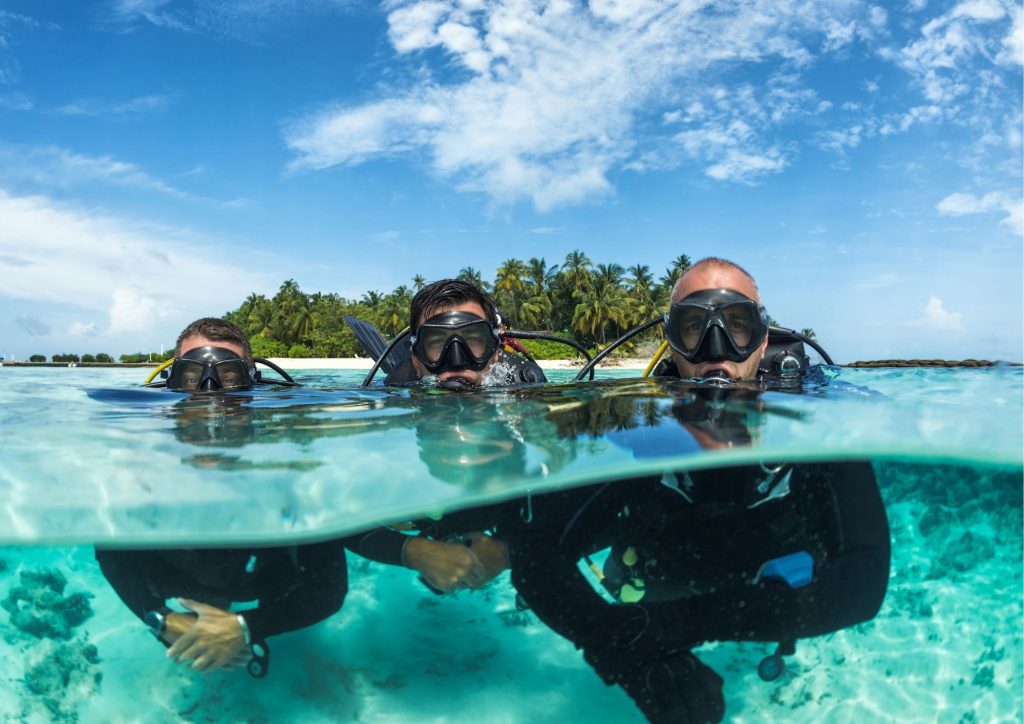
So, you’ve come to realise that an average holiday vacation wouldn’t do this time around. Instead, you want to trade in poolside cocktails for a coral nursery and a sun lounger for a dive boat. There’s no better place than Koh Tao to enjoy a meaningful holiday.
Koh Tao has long been the world capital of obtaining your PADI Open Water Diver qualification, but in 2026, it’s the citizen scientists on the island that truly hold the magic. Marine conservation internships on the island have transformed from a set of niche passions into fully-fledged programs, bridging the gap between recreational scuba diving and scientific inquiry.
Reaching this haven under the sea is part of the adventure. Most people arrive by air on the neighbouring island of Koh Samui before taking the Koh Samui to Koh Tao ferry, which is a 90-minute rush across the Gulf of Thailand and exhilarating in itself. The moment you alight from the ferry at Mae Haad Pier, you know that you have entered a different world.
Finding Your Niche in the Blue
Marine conservation does not involve a one-size-fits-all approach. Before you sign up, you must think about what sort of eco-warrior you want to be. On the island, most marine programs involve either research-related data collection or actual coral reef restoration.
If you find yourself with a flair for numbers and biology, consider opportunities like the New Heaven Reef Conservation Program. They go deep into Ecological Monitoring (EMP), where you’ll discover ways to track indicator species, such as butterflies of the sea or invertebrates, giving you insight into just how healthy your reef systems truly are. Alternatively, if you find your niche getting your feet wet, or rather, sandy, you may consider institutions that put their priority into sustaining artificial reefs and coral nurseries for reefs. The importance lies in alleviating natural reefs from excessive visitor traffic as tourism figures skyrocket towards a projected 40 million a year for Thailand’s tourism statistics.
The Training Pipeline: From Zero to Eco-Hero
You don’t have to have a PhD to get started, but you do have to be a strong diver. Advanced Open Water certification is a prerequisite for most reputable internships. Why is that? Because you can’t accurately count fish or move corals if you can’t get your buoyancy right.
The first week of a conservation internship is usually Bootcamp. You’ll be spending mornings in a classroom learning about coral anatomy and oceanography, and afternoons in the water practising survey techniques. You’ll be taught how to use a transect line, which is a long measuring tape, to mark out an area of the reef. It sounds simple, but try doing it in a slight current while you’re documenting five different types of substrate.
By the end of month one, you’ll be able to read the reef like a book, noticing the subtle signs of coral bleaching or the presence of invasive species, such as the Crown-of-Thorns starfish.
Life Above the Surface: The Social Side of Science
One of the best-kept secrets about interning on the island of Koh Tao is the community that you will be a part of as an intern there. You will not be just another tourist on the island for a short while, but a part of the infrastructure of this island. Most of the internships come with shared eco-dorms or basic bungalows where you will be living with 5 to 10 other interns from across the globe.
The days are long and physically demanding. Expect to be carrying tanks, scrubbing boat decks, and diving for up to four hours per day. But the fun is in post-dive debriefs at bars in Sairee. A certain kind of connection is attained after your afternoon activity involving rescuing a sea turtle or your excavation of 50kg of ghost fishing nets from a deep pinnacle.
Investing in the Right Gear
Once you’re at a dive school, most of them will offer you what you need for basic diving. A conservation intern will, however, require a few specialised pieces of equipment.
You’ll definitely want to bring your own personal dive computer. It’s necessary for your safety when you’re doing multiple dives per day.
In addition, you might consider acquiring a good-quality dive slate and a mesh bag for holding rubbish. It will be important for you to remain close to the reef as you start collecting data; hence, a full wetsuit or a rash guard will come in handy for protecting you from rubbing or stinging as you move. The idea here is to leave only bubbles and take only data.
Making the Leap
Starting a marine conservation internship is more than just adding to your resume; it’s an attitude adjustment. You’ll no longer see the ocean as an adventure playground, but rather as a delicate system that is in desperate need of help. Koh Tao has an ideal learning environment that is real, lively, and passionately committed to survival.
So, take your mask with you, purchase your ferry ticket, and get ready to experience the Gulf of Thailand from a completely different perspective. The reefs are waiting, and they have many tales to tell if you’re willing to listen.